
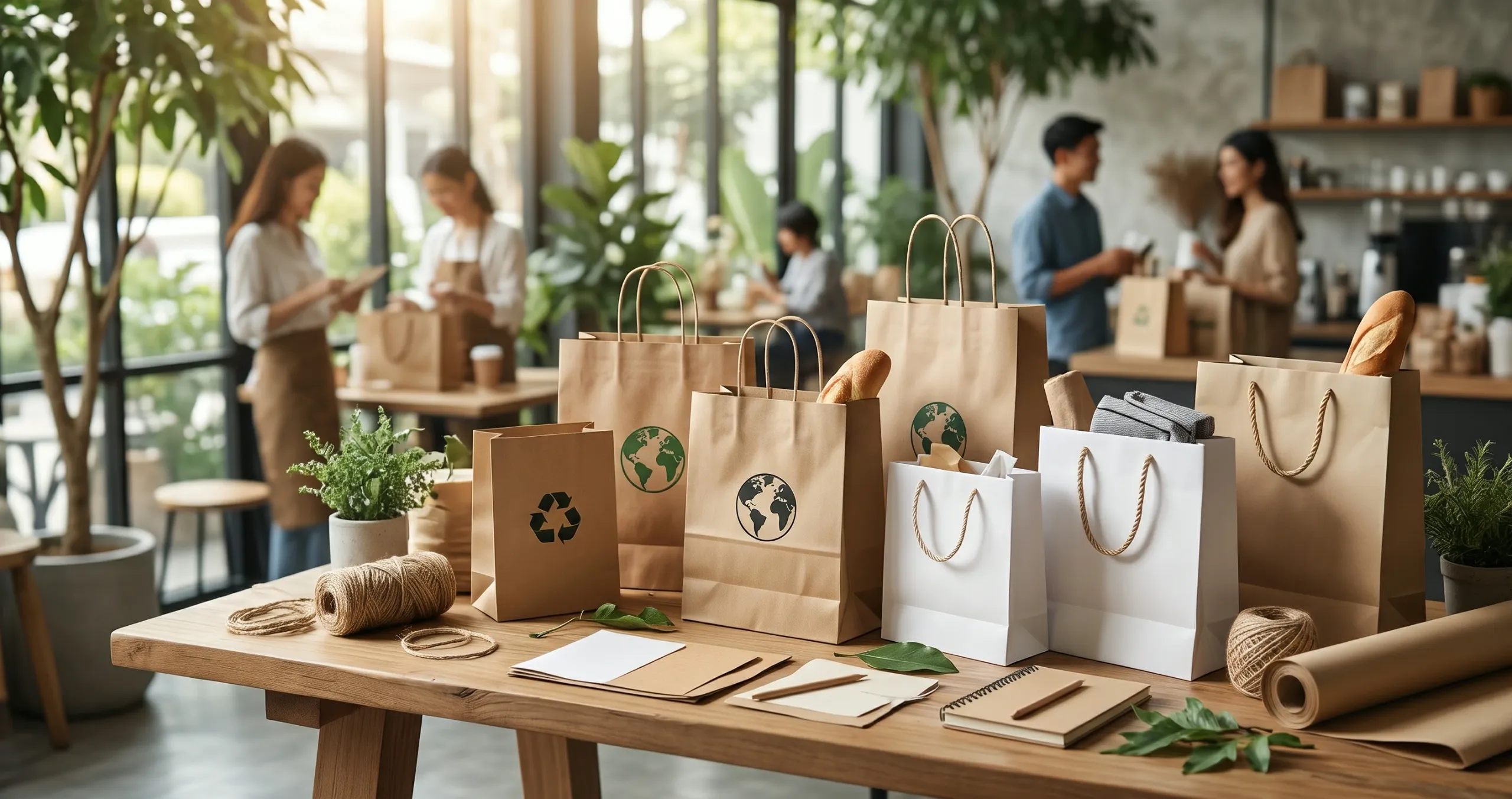
A paper bag is a packaging solution made from natural wood pulp, designed to carry and transport goods as a sustainable alternative to plastic bags. It is 100% biodegradable, recyclable, and elevates a brand’s image to appear modern, trustworthy, and environmentally responsible.
Why Are Modern Businesses Switching to Paper Bags?
Transitioning to paper bags is more than just an eco-friendly trend—it is a strategic investment that creates long-term business advantages:
- Environmentally Friendly: Biodegrades naturally within a few months, significantly reducing persistent plastic waste.
- Enhances Brand Value: Custom-printed paper bags give products a premium, memorable look while serving as mobile advertising.
- Strong and Durable: Modern industrial-grade paper offers high tensile strength, capable of holding everything from food and beverages to apparel and gift boxes.
- Meets Consumer Expectations: Today’s consumers actively support sustainable brands, which directly encourages repeat purchases and customer loyalty.
Common Types of Paper Bags Used in Business
Choosing the right paper material ensures both visual appeal and effective cost control.
1. Kraft Paper Bag
Made from pine wood pulp, typically featuring a natural brown color (or bleached white). Known for its high tear resistance and durability, it is ideal for restaurants, bakeries, cafes, and organic products.
2. Art Card Paper Bag
Features a smooth, bright white surface that delivers sharp, vibrant print results. Often finished with matte or gloss lamination for added luxury and water resistance, making it suitable for fashion brands, cosmetics, and premium gifts.
3. Bond Paper Bag
A lightweight, cost-effective white paper with a texture similar to standard writing paper. Best suited for lightweight items such as pharmaceuticals, documents, or small souvenirs.
Comparison Table: Choosing the Right Paper Bag Type
| Paper Type | Key Features | Durability | Best Suited For |
| Kraft Paper | Natural eco-friendly look, tear-resistant | High | Restaurants, cafes, handmade goods |
| Art Card Paper | Vibrant color printing, matte/gloss finish, luxurious | Very High | Apparel, cosmetics, jewelry |
| Bond Paper | Lightweight, budget-friendly | Moderate | Pharmacies, bookstores, party favors |
How to Choose the Right Paper Bag for Your Products
- Calculate Product Weight: For heavy items, select paper with a thickness of 150–250 GSM or higher, reinforced with a cardboard bottom insert.
- Determine Shape and Size: Measure your product packaging (Width x Length x Height) and add 1–2 cm of clearance on the sides for easy packing and removal.
- Select the Right Handle Style:
- Twisted Paper Handles: Pairs naturally with Kraft bags for a cohesive eco-friendly look.
- Braided Rope / Ribbon Handles: Adds elegance and supports heavier loads, ideal for Art Card bags.
- Die-Cut Handles: Saves storage space and works well for small, lightweight items.
- Consider Food Safety: For direct food contact, always choose certified Food-Grade paper free from harmful bleaching agents.
Frequently Asked Questions (FAQ)
Are paper bags waterproof?
Standard paper bags are not waterproof, but moisture and splash resistance can be added through film lamination or food-safe greaseproof and water-resistant coatings.
How much weight can a paper bag hold?
Weight capacity depends on paper thickness (GSM) and handle type. Standard Kraft bags typically hold 2–5 kg, while reinforced Art Card bags with braided rope handles can carry 5–8 kg.
How long does it take for a paper bag to decompose?
Uncoated paper bags naturally biodegrade within approximately 2 to 6 weeks, depending on environmental conditions and soil moisture.